Artelier Public Art Case Study: One Medlock Street Manchester
- Oct 21, 2025
- 4 min read
Updated: Oct 22, 2025
For a major new development by Greystar in Manchester, Artelier was enlisted to commission a monumental public art artwork that would span the 33m by 15m façade.

Manchester’s New Front Door: A Landmark Development and Monumental Artwork
A major development is reshaping the gateway to Manchester city centre. One Medlock Street, located at the start of the city centre, is being hailed as “Manchester’s new front door” and it reflects the city’s future: integrated, walkable communities with vibrant public spaces.
Located at the southern end of Manchester's First Street masterplan, the building will be a landmark mixed-use scheme that combines a 14-storey Grade A office building with a 39-storey student residential tower.
Facing River Street to the north, a new public square will form the entrance plaza to a flexible-use community centre at the base of the residential building. But one of the most striking features of the development will be a monumental public artwork – a 10-storey piece embedded into the building’s façade, designed to be seen from afar and experienced up close.
Artelier’s public art team have been developing this project in close collaboration with the architects, construction team and developers since 2024, and as we reach the final stages we are excited to share progress. In the coming months, we will be announcing the artist who won the commission, their rich research, and the final design which will become part of Manchester’s defining cityscape. The project is due for installation Q3 2026.


Location of site © John Matthews Architects
Strategy and Scope
Working with the architect, a dramatic location for the artwork was identified: a vast wall on the façade of the building. At this enormous scale, it will be clearly visible from both the surrounding areas and the nearby major roads into the city.
The façade measures 33m by 15m, with the artwork occupying the entire surface – an impactful canvas that defines the building’s identity. We envision the piece to play with this scale and light, a work that was designed to be both monumental and nuanced. The architect’s brief called for the artwork to be realised in pre-cast concrete, which offers architectural integrity as well as sculptural depth.

Artist Selection
The artist was selected through a rigorous process that included an open call, multiple shortlisting rounds, and stakeholder input.
We were looking for someone with a strong professional background and a research-led approach. The artwork needed to offer more than an architectural finish, and so an artist who could develop a strong, locally informed concept was critical. The work should feel culturally potent, but stand the test of time given its integration into a façade.
With the highly architectural scope of the brief, the selected artists needed to be capable of navigating the technical demands of the commission while bringing imaginative command to the medium.
In mid-2024, a UK-based artist was selected. They have since been developing their design in collaboration with the wider project team, including precast specialists. Their involvement will be formally announced as the piece enters production later this year.

Developing the Design
At the heart of the commission is a desire for the artwork to speak to its context. It should feel necessary and accessible, offering everyday delight while creating a bridge between past and present, and between the natural world and built form.
The design process was shaped by the artist’s deep contextual research into the locality, connecting both with the natural history of the site and the architectural characteristics of Manchester.
We sought to innovate working with pre-cast concrete, avoiding predictable outcomes and instead delivering an artwork that felt elegant and visionary. The artist closely experimented with scale and viewing perspectives, as well as the possibilities of manipulating light and shadow to enhance the sculptural relief of the design.
Making in Concrete
The process saw dialogues between key partners to assess what is possible within the parameters of pre-cast concrete – in terms of the material, structural design, and effects of colour. This involved extensive experimentation, team collaboration and sampling so that the artist could achieve a design whose subtle effects harmonise with the building’s overall palette and texture.
The creation of the textured concrete surface begins with a computer-generated 3D model, designed using CAD software. This model defines the geometric relief pattern that will be transferred to the concrete. CNC machinery then routes the design into a solid material, producing a precise mould. A flexible rubber mould is cast from this formwork, capturing intricate details and serving as the reusable base for concrete casting.
Once the rubber mould is ready, concrete is poured and left to cure. After setting, the mould is removed to reveal the textured surface. Architectural precast concrete cladding is uniquely suited to this process, offering structural strength, low porosity, and excellent mouldability. It allows for expressive finishes and a wide range of shapes, textures, and colours — ideal for both performance and aesthetics.



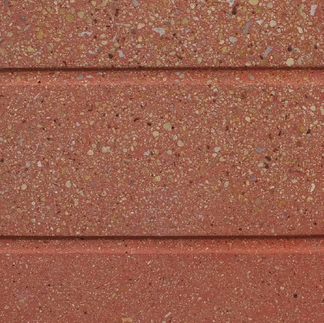

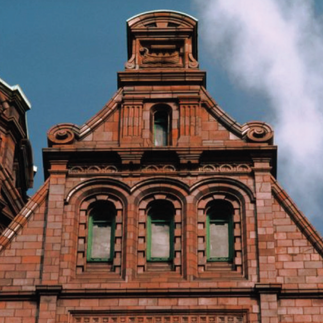
Aggregate samples & examples of Manchester red bricks
Although the final design will be shared later this year, a particularly interesting aspect of the artist’s concept is using concrete to reference Manchester’s red brick heritage. The façade will feature a red brick-toned cement base, with vibrant flecks of coloured aggregate. The concrete will be acid-etched to modulate texture and tone. Deeper etching reveals more aggregate, resulting in a lighter overall tone. Shallower etching enhances the richness of the red base, producing a deeper, more saturated colour. This controlled variation allows for nuanced modulation across the façade, adding depth and complexity to the visual experience.

Looking Ahead
As the project enters its final stages, we’re excited to share more about the collaborators and the making of this ambitious work. Most of all, we look forward to the artist sharing their design in their own words – and how their rich research has shaped the themes the piece explores.
The final artwork will be unveiled in Q3 2026, marking a new chapter in Manchester’s evolving cityscape.